- Date
- 1918–1859 BCE
- Culture
- Egypt, Meir, Middle Kingdom (2040–1648 BCE), Dynasty 12, reign of Amenemhat II (1929–1895 BCE)–reign of Senusret III (1878–1839 BCE)
- Medium
- gessoed and painted cedar
- Dimensions
- Overall: 69.7 x 55 x 213 cm (27 7/16 x 21 5/8 x 83 7/8 in.)
- Department
- Egyptian and Ancient Near Eastern Art
- Classification
- Funerary Equipment
- License
- CC0
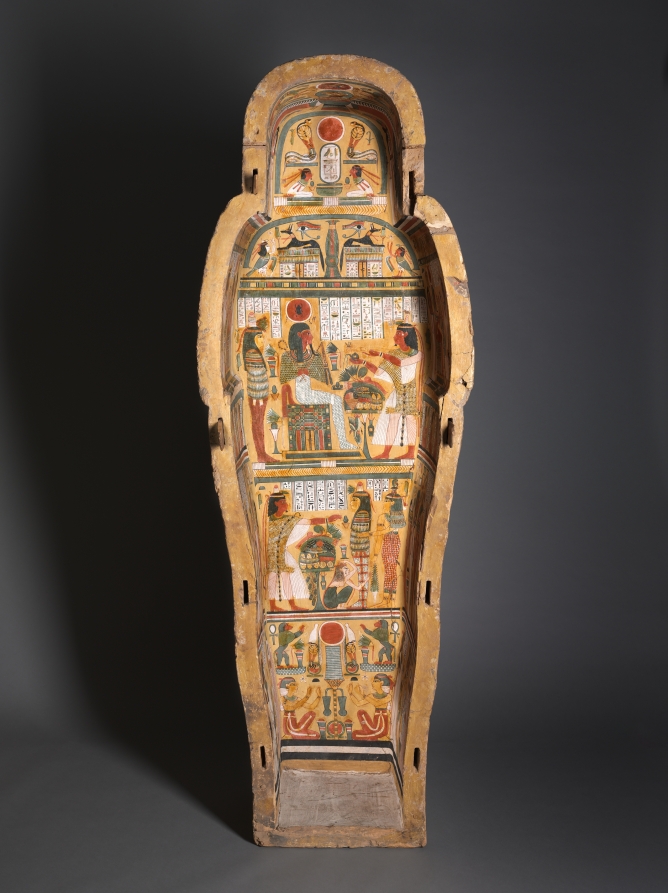
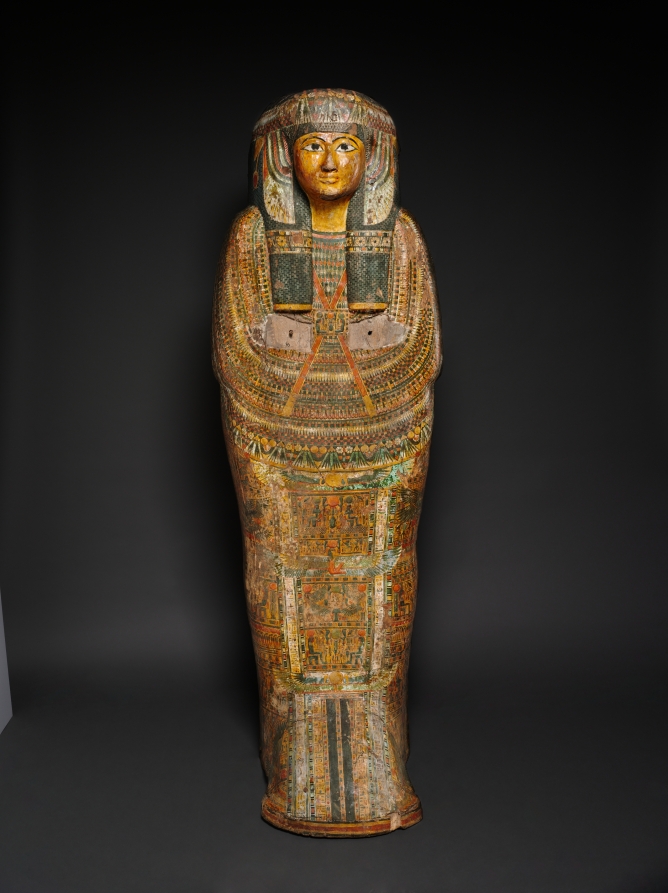
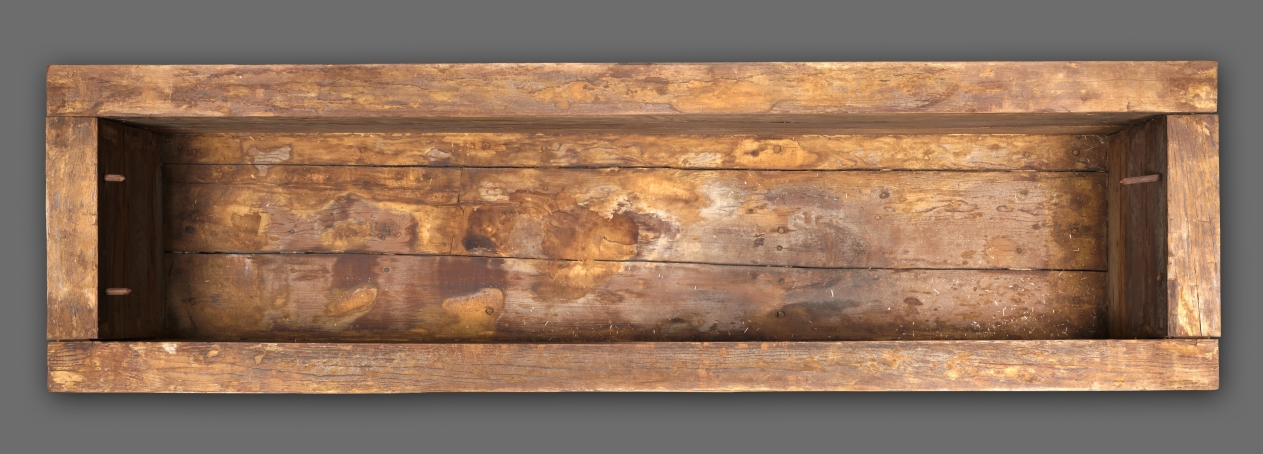
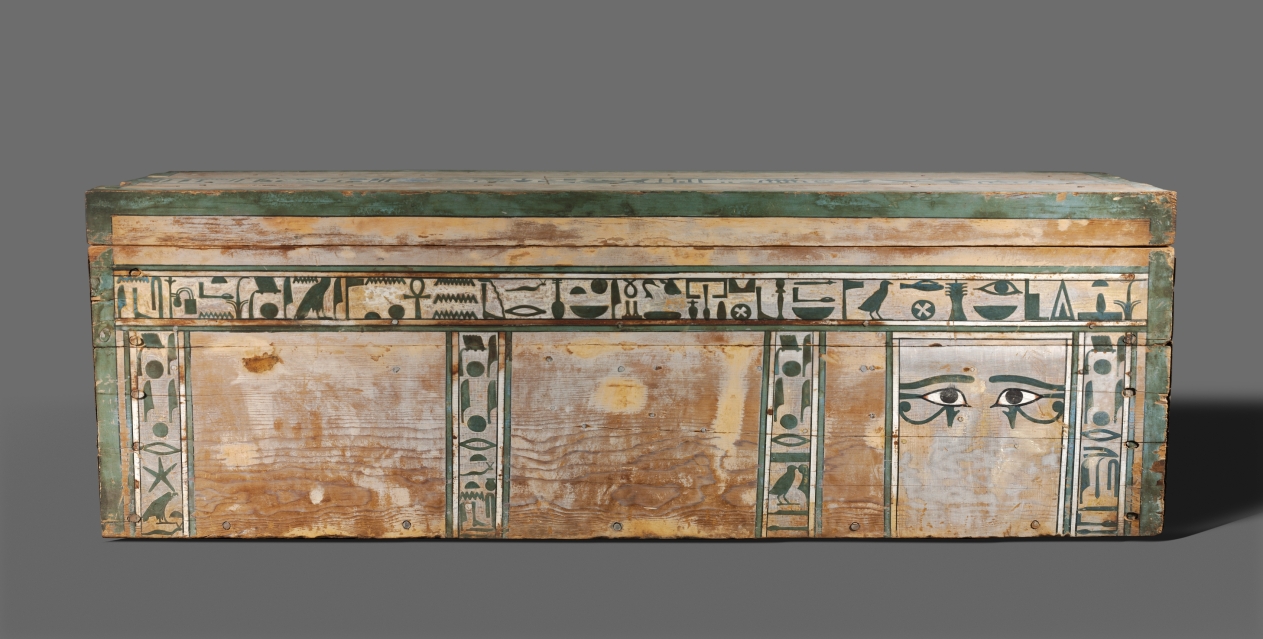
This is the most common type of coffin during the Middle Kingdom. The mummy was placed on his left side, facing east, his head behind the two magical eyes. These--in the shape of human eyes, to which have been added the markings of a falcon's head--were supposed to enable him to behold the rising sun, reborn daily. The long horizontal inscriptions are prayers to Anubis (god of embalming) and Osiris (god of the dead) for offerings of food and drink and other items necessary in the afterlife. The short vertical inscriptions place him under the protection of various other cosmic and funerary deities.